Container Gardening Recap
Many thanks to those that came out to the Pomegranate event to hear me nerd out about growing in pots! It was a lot of fun to get to know some new neighbors, and to troubleshoot container garden challenges together. Your interest and involvement truly made my day this weekend. Here are a few takeaways from the container gardening chat we had.
The two keys to container garden success are water and nutrients. This means choosing the right kind of container for your space, knowing when and how to feed the soil, and choosing the best watering plan for your lifestyle. Once you have these decisions made, you can garden like a champ in any space.
Container type
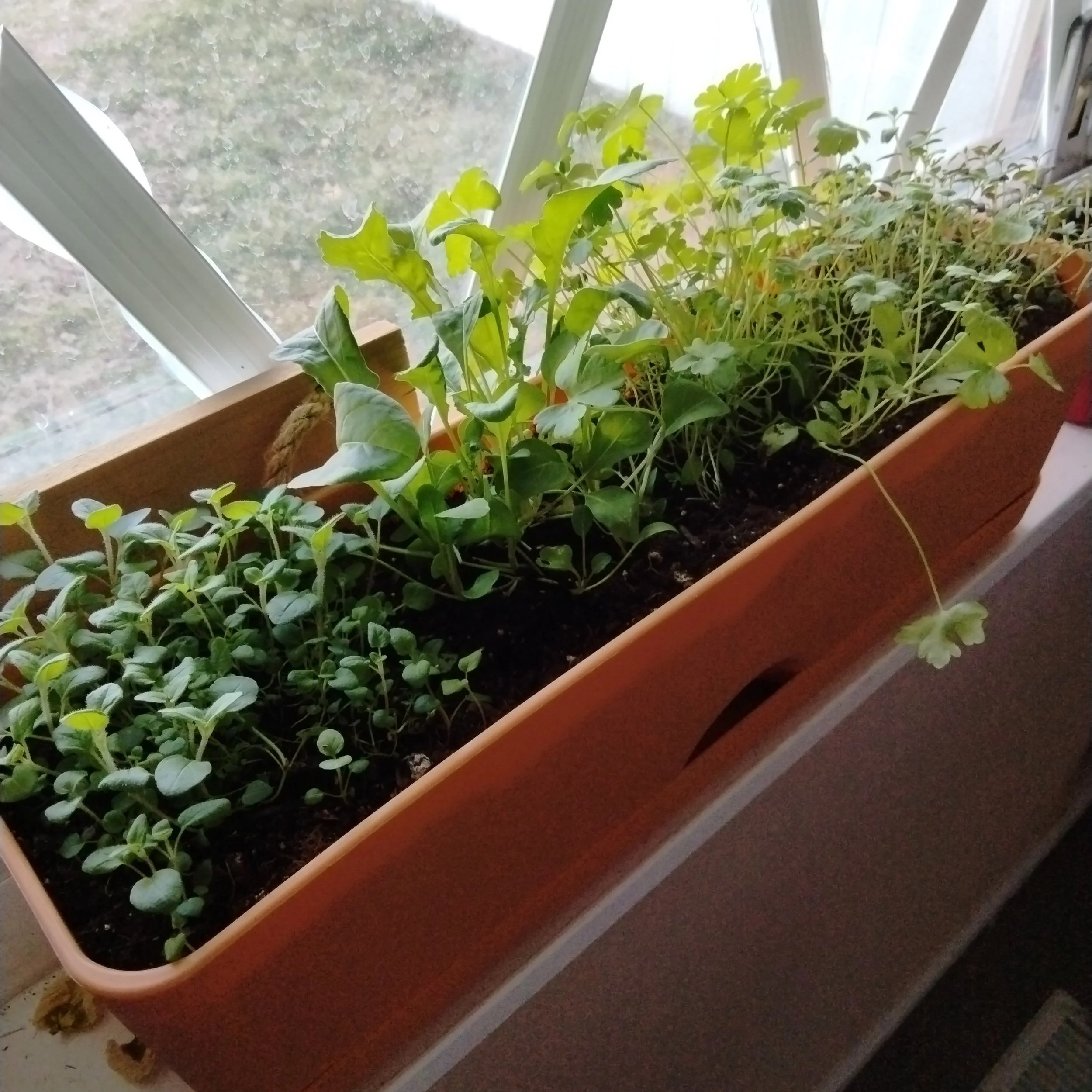
I like to use a long, thin, windowsill-shaped pot for growing herbs and greens in the kitchen. This one also has a hole in the bottom for watering the plants from the bottom up.
To start a container garden the first step is deciding on a container. There are pots available at stores for just about any need or space, and if you're looking to budget further than that simply look around your home and find whatever you can that hold water. If you're reusing plastic containers from around the house do be wary of any chemicals that may have been contained in them before, and try to keep an eye on that little recycle symbol on any plastic container. Generally speaking recyclable plastics #2 and #5 are considered safe for reuse, the other numbers may be known to leech more chemicals into your soil as you water your plants. There are plants I've used 5 gallon buckets for, seasons I've used old boxes with bags lining them, and I typically start my seeds in sandwich baggies of soil on a windowsill. Anything that's chemical free and water tight is a great option for container plants. If you're buying pots for your space it's helpful to know what you want to plant in each. Longer shallow pots can be nice for salad greens, deep pots are good for tomatoes or root veggies, and wide pots do well for things like potatoes and herbs. Another feature to consider is what sort of drainage the pots have, I typically like my root veggies to have a better draining pot, whereas my tomatoes and peppers may be planted in a water retaining pot. Some pots have openjngs in the base to help with bottom watering on your deeper rooted plants, and others will drain til they hold just enough water to keep the soil damp. If I'm ever worried about too much water soaking into the bottom of the pot, or it starts to get a damp stinky smell, I like to line the bottom inch or so with rocks, pebbles, or just some marbles or glass beads to help raise the soil off the bottom.
Soil considerations
Next you want to choose a good soil. I have been using a semi local natural blend this year, but have in the past used potting soils of all organic varieties. I've even had some seasons where I've started with soil from the backyard somewhere and added nutrients and drainage medium as it grows. A typical potting soil mix already contains a fiber to help with water retention (usually coco coir, moss, or forest products of some kind), if I'm mixing my own soil I tend to go for coco coir to add into the mix. Perlite is another additive you can often find at any garden store, and vermiculite can be a helpful ingredient, too. Again, if you bought a potting soil specifically it'll already contain these ingredients.
Nutrients for plants
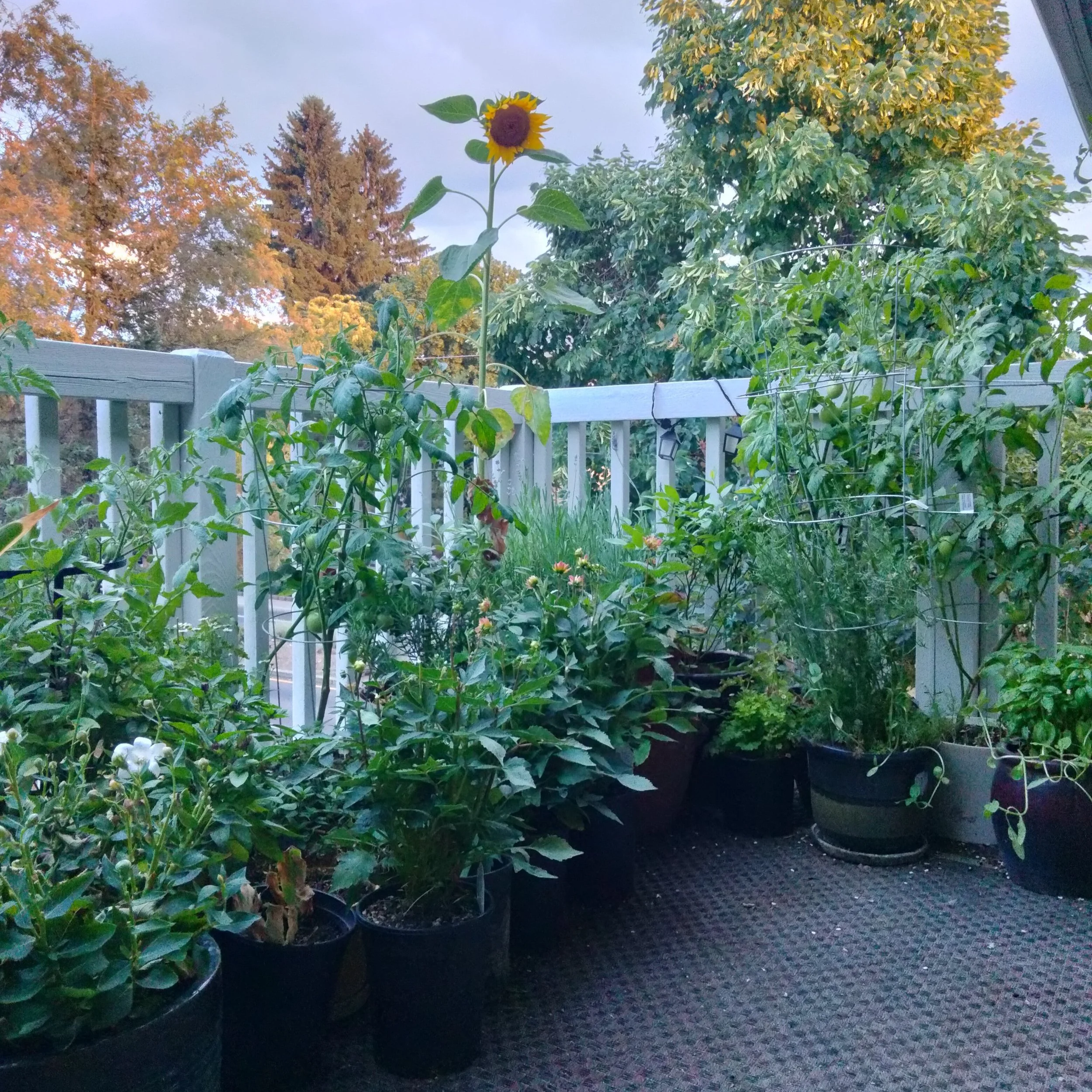
This balcony grew a dozen different tomatoes, peppers, root veggies, herbs, and more for my family.
Once you've settled on a pot and soil, and you've planted your seeds or starts, it's time to start thinking about plant food. Most premixed potting soils come with nutrients included in one way or another. In general a balanced fertilizer will feed any of your plants and get you to a healthy harvest. Each plant has its own needs and preferences, so the NPK ratios may vary. The labels on a fertilizer or a quick google search will give you more specific insight on what any plant may be lacking.
Fertilizer choices range from pellets to natural powders to liquid solvents. They all work with time, some are easier than others to add in to pots. I prefer making liquid teas out of my nutrients, and almost always focus on worm castings in my container gardens. It makes sense when you think about whether or not worms can find your plants on a third floor balcony. In a garden bed worms are the background workers turning your soil and processing nutrients with each pass through the roots.
In a container garden you're in charge of spreading the worm castings to all of your plants. My favorite way is in a worm casting tea. I usually fill a section of old nylons with a handful of castings and let it soak in a full watering can overnight. Then in the morning squeeze the castings out and sprinkle the bulk of them into the pots. After that water over them all with your can of dark castings tea. I like to do a castings feed like this every week or two. For other fertilizers with an NPK ratio I typically feed the plants every 2-3 weeks in the pots.
Final thoughts
Those are the main factors to a successful container garden. Some other things to consider are plant types. Some plants like tomatoes come in determinate and indeterminate varieties, determinate is best for pots because it has a set growth height. Another great feature in plants for pots is any sort of dwarf variety. Tomato cages are a great way to support all sorts of pitted plants, as well. As always feel free to reach out if you have questions about your own garden, and happy growing!