The power of the Radish
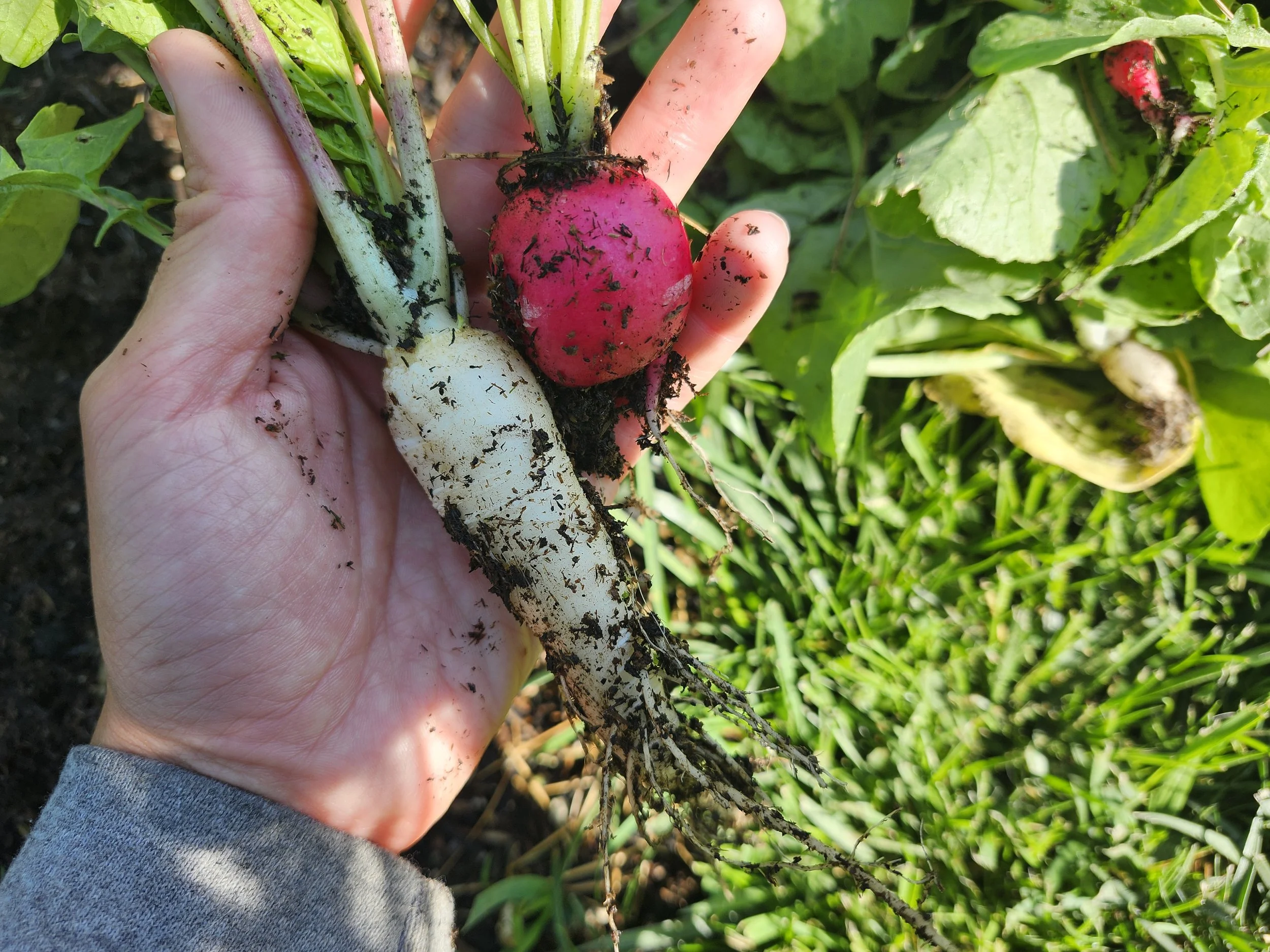
I like to grow a few different radish varieties each time. Usually for snacking on I grow french slippers, daikon, and purple plums.
I love growing radishes, and I always have since I was a kid picking them out of my mom’s veggie garden, too. These days it’s my best selling microgreen on the farm stand line-up, I’ve developed my own favorite pickling brine to snack on them all year long, and their greens make one of my favorite pasta sauces. If you come wandering through my greenhouse, veggie rows, or even flower beds in the spring months you’ll likely see their prickly little leaves popping up all around. What makes them one of my favorite first seeds to sow?
To start, they direct sow in very cold weather and sprout pretty well. As they turn to seedlings they are very cold hardy, I’ve even had some grow in under snow during mild winter seasons. The radish is also one of the fastest growing veggies I keep on the farm. Some people refer to them as the survival plant, because you can eat any part of the plant at any stage of growth. Not only that, but they typically grow in 5-6 weeks. This means I can fit a bunch of harvests in during each short Central Oregon season.
The bigger picture, and the main reason I plant them as one of my first seeds of the season, is that they act as a great indicator of my soil health. Radishes are a plant that grow best in the most optimal soil for most other veggies you’ll grow in the season. They are my first test of my soil’s NPK, that’s the levels of the main nutrients you’ll find on any sort of garden fertilizer. Fertilizers are often labeled with the Nitrogen (N) - Phosphorus (P) - Potassium (K), these are the main ingredients to a healthy plant diet in your garden. Different plants take different levels of each, but in general a well balanced bed will grow just about everything well. Radish roots are my first real indication of my nitrogen and phosphorus being out of balance.
This year my first round of radishes has come up with mostly leaves, and very skinny or small roots. Not necessarily the best for chopping into a salad, but their greens have their own place in my kitchen. Having seen the beds that produced the most of the leafy greens instead of the big roots, I know which of my beds need a little boost of phosphorus. My soil will get it’s phosphorus this round from a wash of fish bone meal and likely another layer of composted manure blended in. There are lots of options to add in some phosphorus, though. Things like rock phosphate, bat guano, manure, bone meal can all be sources of phosphorus for your plants. Lots of people like to add in kitchen compost containing coffee grounds, eggshells, and banana peel to accomplish it, too.
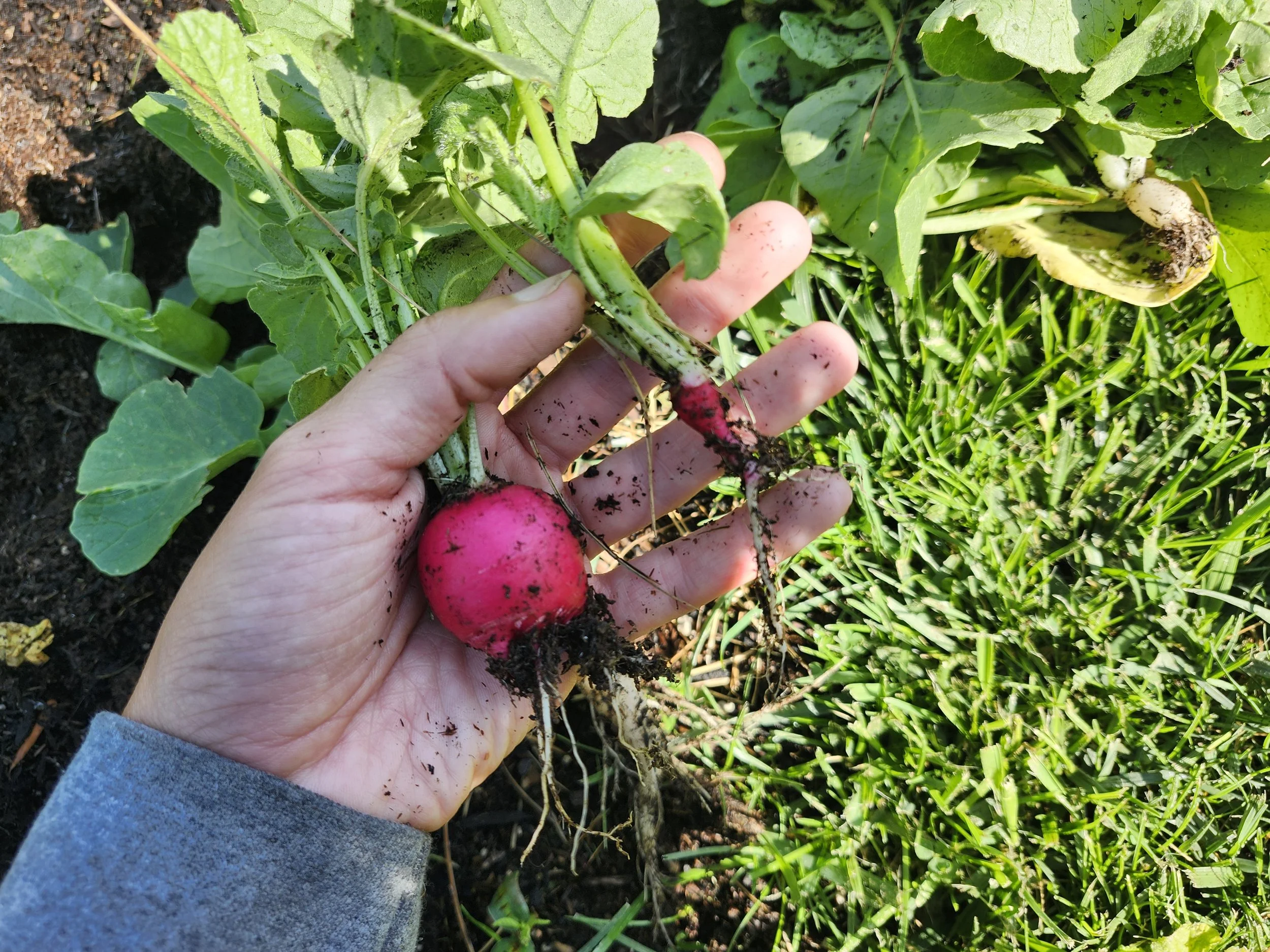
With the same size leaves on the same variety of radish, I can see that the plant on the left likely found more phosphorus in the soil than the one on the right. These came out of two different beds, so now I know which one to add a little extra into.
The other function of my radish scattered seemingly chaotically throughout the garden beds is for soil and pest maintenance. They become one of my favorite companion plants for almost anything. A lot of people will tell you not to plant radish in with potatoes or other brassicas like broccoli and cabbage, but I have used it as a precursor to most of those while they’re seedlings. I think it’s worked out in my garden beds due to the timing, I often plant radish in for soil maintenance and let the “no-no” plants sprout up as the radish is getting close to harvest. Radishes can be a great companion to cycle through with soft, leafy plants like herbs and tomatoes. The radish can help deter pests from the tastier plants nearby, and work well at breaking up tough soils. Their success at breaking up soils has been one of my main reasons for starting with the radish each season. It helps me pull up any spots that grass may have spread into, and acts as a sort of less-invasive tilling method when I harvest the roots.
I often compost piles of rejected radish to build up organic matter, but first I’m using every bit of it I possibly can. I like to chop the roots fresh and either eat them that day or can them for later in the year. As for the greens I make a pesto sauce with local nuts and a touch of lemon, and it’s one of my favorite “pesto” flavors for the summer. Check out my Radish Pesto post for the recipe I like to use. After I’ve worked as much of these helpful plants into the kitchen as possible, I like to chop up a bit of the scraps to mix in with the fresh greens for the birds that day. Then the remaining scraps get piled in with the compost to return those nutrients they tested for right back into the earth. From start to finish, the radish truly is a gardener’s best friend!